| Scope of the program | Graduates are prepared for roles addressing sustainability, transition, and innovation challenges across sectors.
Career paths include positions with international organizations, consultancies, and sustainability-focused institutions.
Graduates can work in policy analysis, corporate sustainability, and socio-technical transition management roles.
The program also supports careers in research institutions studying societal and environmental transformation.
Many graduates leverage the joint degree's four-country academic network for international careers.
The program also provides a foundation for further doctoral research in sustainability transitions. |
| Program entry requirement | a signed application (generated from the IRK system),
a signed personal questionnaire with a photo (generated from the IRK system),
an original or a copy of the Bachelor-/Master-level diploma, or a Bachelor-/Master-level diploma with an apostille or legalized Bachelor-/Master-level diploma from abroad (based on this document, the University will prepare a certified copy, and the copy will be returned) together with a translation of the document into English made by a sworn translator (applies to candidates who hold a diploma issued in a language other than Polish or English); in the case of a foreigner referred to in Art. 93a of the Act of 7 September 1991 on the Education System – a written document issued by the NAWA Director confirming eligibility to apply for admission to studies is required,
a document confirming a change of surname (applies to candidates with a certificate/diploma issued in a surname other than their current surname),
proof of payment of the application fee,
a document certifying knowledge of English at a proficiency level of at least B2 according to the Ordinance of the Minister of Science and Higher Education of 30 July 2025 on the types of documents certifying proficiency in the language of instruction in higher education studies,
a written document issued by the NAWA Director confirming eligibility to apply for admission to studies (applies to candidates with a document other than the one listed in Art. 326a, section 1 of the Law on Higher Education and Science),
i) a certificate confirming that the document entitles the holder to study in the country of issue, if the document itself does not contain an appropriate entry (applies to candidates who possess any of the documents listed in Article 326a, paragraph 1, points 1) and 4) of the Law on Higher Education and Science).
Foreigners must also submit:
a certified copy of the document entitling them to study free of charge (applies to foreigners eligible for free full-time studies in English),
a copy of the health insurance policy or the European Health Insurance Card for the 2025/2026 academic year, or confirmation of membership in a public health insurance plan within the meaning of the Act of 27 August 2004 on healthcare services financed from public funds (consolidated text: Journal of Laws of 2024, item 146), or confirmation of coverage by the insurer for the costs of treatment in the territory of the Republic of Poland. |
| Required GPA | Bachelor’s: 2.5 CGPA or equivalent (may vary by program). |
| GRE Required | No GRE required for admission to this master's program at Poznań University of Economics and Business. |
| GMAT Required | No GMAT required for admission to this master's program at Poznań University of Economics and Business. |
| Application Process | How to Apply to Study in Poland?
When applying to polish universities, students should keep in mind these crucial steps:
1. Select the course you want and university first.
2. Visit the website of the former university to obtain the application.
3. Complete the application and look for further information, such as exam requirements and other information on admissions for students from abroad.
4. Enroll in and complete the necessary test.
5. Enclose the completed application form and any other documents, such as the academic criteria.
6. Proof of funding for your research (such as bank balance).
7. Standards for proficiency in English (IELTS, PTE, TOEFL Scores).
8. Foreign Student Health Insurance.
9. The acceptance letter will be sent to your mail by the university once it checks your application and supporting documentation.
10. After receiving the acceptance letter, you have a deadline for paying your deposit.
11. Attend that particular university on the given day. |
| Available Scholarships | https://studyabroadupdates.com/scholarships/ |
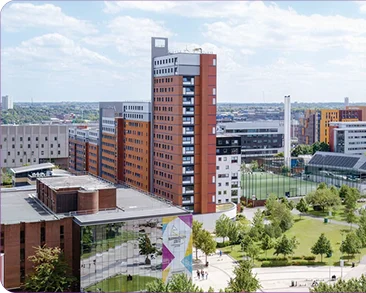
| Program accreditation | Poznań University of Economics and Business (PUEB) holds positive accreditation from the Polish Accreditation Committee (PKA). It is one of the oldest and most prestigious economic universities in Poland, consistently ranking among the top business schools nationally. Select programs, including Finance and Quantitative Finance, are CFA Institute-accredited, reflecting close alignment with the Chartered Financial Analyst curriculum. This accreditation confirms PUEB meets rigorous national and international standards for business and economics education. |
| Living expenses | Living Expenses in Poland
• Monthly Budget: Generally ranges between €400 and €600 per month (approx. PLN 1,500 – 2,500) to live a moderate student life.
• Accommodation: Highly affordable on-campus university dormitories cost roughly PLN 400 – 600 (€90 – €140) per month. A private 1-bedroom apartment outside the city center can average around PLN 2,300 (~€540).
• Visa Proof of Funds: To clear your student visa requirements, you must present an accessible bank statement showing a baseline liquidity of approximately PLN 8,000 (~€1,850) in addition to your paid tuition receipts. |
| Visa Process Details | 1. Passport: Valid passport with old ones if available (Mandatory).
2. CNIC / B-Form / FRC: ID and family relation documents (Mandatory).
3. Photographs: Biometric/passport-sized photo (Mandatory).
4. Offer Letter: Official unconditional admission letter (Mandatory).
5. Tuition Fee Receipt: Deposit, payment, or scholarship proof (Mandatory/Conditional).
6. Academic Documents: Transcripts and degrees with attestations (Mandatory).
7. Language Certificate: IELTS, TOEFL, or language proof (Conditional).
8. CV / Resume: Updated resume with gap details (Mandatory/Conditional).
9. SOP / Motivation Letter: Study plan and home ties explanation (Mandatory/Conditional).
10. Financial Documents: Bank statements, income, and funds proof (Mandatory).
11. Sponsor Documents: Sponsor ID, relation, affidavit, and income proof (Conditional).
12. Accommodation Proof: Housing booking or address (Mandatory/Conditional).
13. Insurance: Travel/health insurance (Mandatory/Conditional).
14. Police Certificate: Character certificate if required (Conditional).
15. Medical Certificate: Medical/TB/polio clear certificate (Conditional).
16. Translations / Legalization: Certified translations or attestations (Conditional).
17. Previous Refusals: Refusal letters with explanations (Mandatory if applicable).
18. Travel History: Visas, stamps, and travel proof (Conditional).
19. Family / Home Ties: Property, business, or family return proof (Recommended).
20. Country-Specific: e-Konsulat form / appointment confirmation (Country-specific).
21. Country-Specific: Proof of accommodation and return travel means (Country-specific).
22. Country-Specific: Insurance meeting Polish national visa rules (Country-specific). |
| Part timework | Part-Time Work in Poland
• Hours: Enrolled full-time international students face no restrictions on working hours. You can work part-time, full-time, or freelance without needing a separate work permit.
• Average Pay: The statutory minimum wage is PLN 30.50 per hour gross.
• Tax Benefits: Students under the age of 26 working on a mandate contract (umowa zlecenie) are exempt from both social security (ZUS) and income tax up to a high income threshold, allowing you to take home nearly 100% of your gross earnings. |
| Post-study work opportunity | Post-Study Work Opportunities
• 1-Year Stay-Back Permit: Non-EU graduates of Polish higher education institutions can apply for a 1-year temporary residence permit extension specifically designed to give you an open window to hunt for a job.
• Full Work Permit Transition: Once you land a professional contract matching your credentials, you seamlessly transition into a multi-year Temporary Residence Card (Karta Pobytu) tied to your employer.
• The EU Blue Card Pathway: Highly qualified specialists who secure a position with a salary at or above 150% of the national average (~PLN 10,500/month gross) qualify for a premium EU Blue Card valid for up to 4 years. |