| Scope of the program | Graduates can work as horticultural specialists, crop production managers or plant production advisors.
Typical employers include fruit and vegetable farms, greenhouse operations and nurseries.
Seed, plant protection and agricultural input companies hire graduates for technical and sales roles.
Food processing and retail chains need specialists for fresh produce quality and supply.
Agricultural advisory services and public agencies offer roles in extension and inspection.
Graduates can continue to doctoral studies in horticulture or agricultural sciences or to specialized training. |
| Program entry requirement | Candidates eligible for the qualification process include those:
Holding a relevant diploma obtained in the Polish education system:
- a first-cycle diploma of an engineer in horticulture
- a first-cycle diploma of an engineer in plant health protection
- a first-cycle diploma of an engineer in urban horticulture and arboriculture
Holding a diploma requiring verification of alignment of learning outcomes:
- a diploma from another first-cycle study program or long-cycle master's studies obtained in the Polish education system, or
- a foreign diploma (Bachelor’s degree or equivalent) in horticulture or related field of study entitling the holder to apply for second-cycle studies in the country of issue. |
| Required GPA | Bachelor’s: 2.5 CGPA or equivalent (may vary by program). |
| GRE Required | No GRE required for admission to this master's program at Warsaw University of Life Sciences. |
| GMAT Required | No GMAT required for admission to this master's program at Warsaw University of Life Sciences. |
| Application Process | How to Apply to Study in Poland?
When applying to polish universities, students should keep in mind these crucial steps:
1. Select the course you want and university first.
2. Visit the website of the former university to obtain the application.
3. Complete the application and look for further information, such as exam requirements and other information on admissions for students from abroad.
4. Enroll in and complete the necessary test.
5. Enclose the completed application form and any other documents, such as the academic criteria.
6. Proof of funding for your research (such as bank balance).
7. Standards for proficiency in English (IELTS, PTE, TOEFL Scores).
8. Foreign Student Health Insurance.
9. The acceptance letter will be sent to your mail by the university once it checks your application and supporting documentation.
10. After receiving the acceptance letter, you have a deadline for paying your deposit.
11. Attend that particular university on the given day. |
| Available Scholarships | https://studyabroadupdates.com/scholarships/ |
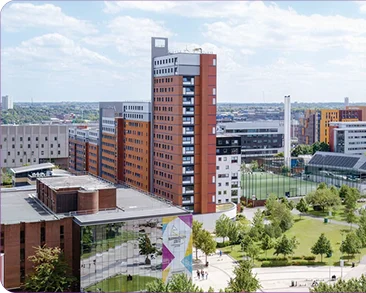
| Program accreditation | Warsaw University of Life Sciences (SGGW) is a public university founded in 1816 and is the largest agricultural university in Poland. Its programs operate under Poland's national higher education quality framework and are recognized by the Ministry of Science and Higher Education. The university is a member of the Euroleague for Life Sciences (ELLS) and takes part in Erasmus+ exchange and research partnerships. It appears in QS subject rankings, with agriculture and forestry among the strongest areas. With over 15,000 students across 13 faculties, it is a leading center for life sciences, technology and economics in Poland. This confirms the university meets recognized quality standards for higher education. |
| Living expenses | Living Expenses in Poland
• Monthly Budget: Generally ranges between €400 and €600 per month (approx. PLN 1,500 – 2,500) to live a moderate student life.
• Accommodation: Highly affordable on-campus university dormitories cost roughly PLN 400 – 600 (€90 – €140) per month. A private 1-bedroom apartment outside the city center can average around PLN 2,300 (~€540).
• Visa Proof of Funds: To clear your student visa requirements, you must present an accessible bank statement showing a baseline liquidity of approximately PLN 8,000 (~€1,850) in addition to your paid tuition receipts. |
| Visa Process Details | 1. Passport: Valid passport with old ones if available (Mandatory).
2. CNIC / B-Form / FRC: ID and family relation documents (Mandatory).
3. Photographs: Biometric/passport-sized photo (Mandatory).
4. Offer Letter: Official unconditional admission letter (Mandatory).
5. Tuition Fee Receipt: Deposit, payment, or scholarship proof (Mandatory/Conditional).
6. Academic Documents: Transcripts and degrees with attestations (Mandatory).
7. Language Certificate: IELTS, TOEFL, or language proof (Conditional).
8. CV / Resume: Updated resume with gap details (Mandatory/Conditional).
9. SOP / Motivation Letter: Study plan and home ties explanation (Mandatory/Conditional).
10. Financial Documents: Bank statements, income, and funds proof (Mandatory).
11. Sponsor Documents: Sponsor ID, relation, affidavit, and income proof (Conditional).
12. Accommodation Proof: Housing booking or address (Mandatory/Conditional).
13. Insurance: Travel/health insurance (Mandatory/Conditional).
14. Police Certificate: Character certificate if required (Conditional).
15. Medical Certificate: Medical/TB/polio clear certificate (Conditional).
16. Translations / Legalization: Certified translations or attestations (Conditional).
17. Previous Refusals: Refusal letters with explanations (Mandatory if applicable).
18. Travel History: Visas, stamps, and travel proof (Conditional).
19. Family / Home Ties: Property, business, or family return proof (Recommended).
20. Country-Specific: e-Konsulat form / appointment confirmation (Country-specific).
21. Country-Specific: Proof of accommodation and return travel means (Country-specific).
22. Country-Specific: Insurance meeting Polish national visa rules (Country-specific). |
| Part timework | Part-Time Work in Poland
• Hours: Enrolled full-time international students face no restrictions on working hours. You can work part-time, full-time, or freelance without needing a separate work permit.
• Average Pay: The statutory minimum wage is PLN 30.50 per hour gross.
• Tax Benefits: Students under the age of 26 working on a mandate contract (umowa zlecenie) are exempt from both social security (ZUS) and income tax up to a high income threshold, allowing you to take home nearly 100% of your gross earnings. |
| Post-study work opportunity | Post-Study Work Opportunities
• 1-Year Stay-Back Permit: Non-EU graduates of Polish higher education institutions can apply for a 1-year temporary residence permit extension specifically designed to give you an open window to hunt for a job.
• Full Work Permit Transition: Once you land a professional contract matching your credentials, you seamlessly transition into a multi-year Temporary Residence Card (Karta Pobytu) tied to your employer.
• The EU Blue Card Pathway: Highly qualified specialists who secure a position with a salary at or above 150% of the national average (~PLN 10,500/month gross) qualify for a premium EU Blue Card valid for up to 4 years. |