Advanced Diploma in Broadcasting –Radio, Television & Film

The Advanced Diploma in Broadcasting – Radio, Television & Film at Niagara College is a comprehensive three-year program in the Arts & Humanities designed for students interested in media production and storytelling across multiple platforms. This program is a sub-discipline of media studies, blending theory with hands-on experience in radio, television, and film production. Students begin with a common first year, then specialize in Radio & TV Presentation, Television Production, or Film Production. The curriculum includes courses in scriptwriting, camera operation, editing, live broadcasting, and media entrepreneurship. The students have access to the new technologically advanced studios, HD production trucks, and immersive field placements, and they are ready to be producers, directors, camera operators, editors, and on-air personalities. The influence of the program is immense because people in the media influence the opinion of the masses, inform the communities, and run the show business. Niagara College has great connections with the industry, new facilities, and a high rate of graduate employment, which makes the college the best choice for pursuing careers in the media.

Course Details

CategoryDetails
TimeBoth full-time and part-time options
CampusWelland
Duration3
Deadline-Date
Fee Per Year19125
Application Fee100
Currencycad
Intake Linkhttps://international.niagaracollege.ca/portal/
Deadline Linkhttps://international.niagaracollege.ca/portal/
IntakesAugust
Program language requirementThe TOEFL, or Test of English as a Foreign Language It is required that official TOEFL or comparable exam results be sent to Booth University College. To learn more, go to TOEFL. The code for Booth University College is 7951). A minimum of 79 on the TOEFL iBT is necessary. An invigilated written exam can also be required. The University College may decide to impose additional exams. The International English Language Testing System (IELTS) administers the test. On the paper-based Academic Module of the International English Language Testing System (IELTS), you must score at least 6.5 overall. Each band must also have a minimum score of 6.0. Official IELTS test results must be sent to Booth University College. The CAEL test, or Canadian Academic English Language On the Canadian Academic English Language (CAEL) exam, you must receive at least a 60 overall and 60 in each subject area. Official CAEL test results must be sent to Booth University College. Academic Pearson Test of English (PTE Academic) The minimum score needed to be admitted to Booth University College is 56.

Who can Choose this program?

High School diploma or equivalent, such as a GED, is required. Beneficial courses include communication, media studies, and English. Additionally, understanding English, media studies, and film or video production is advantageous.

Additional Information

CategoryDetails
Scope of the programNiagara College's Advanced Diploma in Broadcasting: Radio, Television, and Film program provides students with a thorough education in radio, television, and film production. More importantly, it equips them with the practical skills necessary for a successful career in media production and broadcasting. Graduates from this program are prepared for the industry with a solid theoretical foundation and the confidence that comes from hands-on experience. A growing entertainment sector and rising digital media consumption are driving Pakistan's media and television industry's rapid expansion. There is a strong need for qualified individuals who can handle the changing media production and broadcasting landscape because the populace is youthful and tech-savvy. Film production companies, radio stations, television networks, and digital media platforms are just a few of the industries in which graduates with this advanced diploma could find employment. Graduates of this degree have similarly bright prospects abroad. The generation of multimedia content, film production, and digital transmission are all experiencing notable expansion in the worldwide media sector. Nations possessing developed media sectors, including the US, UK, Canada, and Australia, provide stable employment opportunities for proficient individuals in the film and television industries. Furthermore, the media and entertainment industries in emerging regions in Asia, the Middle East, and Africa are expanding quickly, opening up new career options for media professionals. Graduates with advanced diplomas will have a solid basis to operate in various international settings, adjust to shifting media contexts, and support the global media sector.
Program entry requirementEquivalent to the Ontario Secondary School Diploma (OSSD). Any Grade 12 (U) or equivalent in English (minimum grade of 60%) Any Grade 12 (U) or Grade 12 Accounting (M) in mathematics, or an equivalent subject with a minimum grade of 60% Four more Grade 12 (U) or (M) courses in any subject area A cumulative 65% on average throughout the six Grade 12 (U) or (M) courses
Required GPA60%
GRE RequiredN/A
GMAT RequiredN/A
Application Process1. Register for an Online Application: To start your application, create an account on the university’s application portal. This will give you access to the online application form. 2. Start the Application Process: Once registered, start filling out the online application form. The process is simple. 3. Complete the Application Form: Fill out the form with proper and complete information about your academic background, personal details, and program preferences. This will help them to better understand your qualifications. 4. Upload Required Documents: Use the portal to submit the necessary documents online, which may include: • Official Transcripts: Submit official transcripts from any institutions you have attended. • Standardized Test Scores: If applicable, upload your English language test score reports. • CV or Resume: Provide an up-to-date CV or resume that highlights your educational and professional experience. • Statement of Purpose: Write a statement detailing your goals for the program, research interests, and reasons for applying. • Letters of Recommendation: Arrange for two recommenders to submit letters of recommendation through the portal, based on their knowledge of your academic capabilities.
Available Scholarships
Program accreditationN/A
Living expensesStudent residences: 250 – 625 CAD/month. University-arranged homestays: 400 – 800 CAD/month. Rent & share an apartment: 300 – 700 CAD/month, prices for rent depend on location and facilities. If you choose to rent a studio/one-room apartment, you can pay over 1,000 CAD/month.
Visa Process Details"1. Completed application form (IMM 1294). 2. Acceptance letter from the university. 3. Proof of funds showing you can cover your living expenses and tuition fees. 4. Bank statements. 5. Educational documents or evidence of sponsorship (if applicable). 6. Medical examination report from a doctor authorized by immigration. 7. Police clearance certificates from your country of birth and from any other countries where you have lived for six months or more in the past five years. 8. Passport-sized photographs. 9. Payment for the study permit application fee (currently 150 CAD). 10. Custodian Declaration (IMM 5646) (if applicable), required if you are a minor, must be signed by your custodian in Canada. "
Part timeworkEntirely: During planned school breaks, such as the summer or winter holidays, international students studying in Canada are frequently permitted to work entirely. Under 20 Hours (With Possible Exceptions): International students may only be able to work part-time for up to 20 hours a week during ordinary semesters. But, according to your program or any particular work visa you may be eligible for, there might be an exception.
Post-study work opportunityCanada's Post-Graduation Work Permit (PGWP) program: After completing their studies, qualifying international graduates are permitted to work in Canada for a maximum of three years under the terms of this government-mandated scheme. To be eligible, your course of study must be from an approved educational institution, and you must apply for the PGWP as soon as you graduate. Even though NPU might not be on the list of approved universities, you should consider returning to Canada to finish your undergraduate degree or enrolling in a post-graduate program at one of the universities eligible for the PGWP

What are the entry requirements for the Advanced Diploma in Broadcasting at Niagara College?

To enroll in the Advanced Diploma in Broadcasting at Niagara College, applicants must have an equivalent to the Ontario Secondary School Diploma (OSSD), including any Grade 12 (U) or equivalent in English with a minimum grade of 60%, any Grade 12 (U) or Grade 12 Accounting (M) in mathematics with at least a 60% grade, and four additional Grade 12 (U) or (M) courses. A cumulative average of 65% must be maintained across these six courses.

How long is the Advanced Diploma in Broadcasting program at Niagara College?

The Advanced Diploma in Broadcasting – Radio, Television & Film at Niagara College is a three-year program designed to provide students with a thorough education in media production.

What is the application process for Niagara College's Advanced Diploma in Broadcasting?

The application process involves registering for an online application, completing the application form with personal and academic details, uploading required documents such as official transcripts and a CV, and arranging for two letters of recommendation to be submitted through the portal.

What are the language proficiency requirements for the Advanced Diploma program?

Applicants must demonstrate language proficiency through tests such as the TOEFL, where a minimum score of 79 on the TOEFL iBT is required, or an overall score of at least 6.5 on the IELTS, with a minimum of 6.0 in each band. Other accepted tests include CAEL and PTE Academic with specific minimum scores.

Are there any scholarships available for the Advanced Diploma in Broadcasting program?

The page content does not specify available scholarships for the Advanced Diploma in Broadcasting program at Niagara College. Prospective students should check directly with the college for detailed information regarding scholarships and financial aid opportunities.

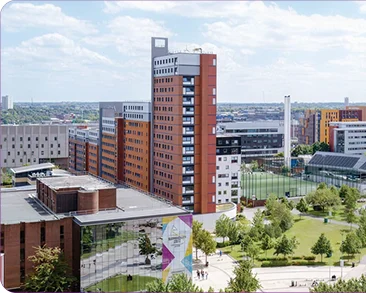
University building
Aston University

Apply now for Jan 2026

Secure your place at Aston University and begin your journey this January 2026.

Need Help?

Our admission counselors are here to guide you through the application process.

Related Articles

Kyoto University Postgraduate Scholarships 2027 in Japan

Kyoto University Postgraduate Scholarships 2027 in Japan

Kyoto University, established in 1897, is one of Japan’s most…

Kyoto University PhD Scholarships 2027 in Japan | Fully Funded Opportunities

Kyoto University PhD Scholarships 2027 in Japan | Fully Funded Opportunities

Kyoto University is one of Japan’s top-ranked research universities, offering…

Institute of Science Tokyo Undergraduate Scholarships 2027 in Japan | Fully Funded & Tuition Support

Institute of Science Tokyo Undergraduate Scholarships 2027 in Japan | Fully Funded & Tuition Support

The Institute of Science Tokyo (Science Tokyo), formed through the…

Scroll to Top