Bachelor of Composition in Instrumentation

This route focuses on instrumentation: orchestrating and arranging for ensembles and orchestras alongside the student’s own composition. The Composition programme at the Royal Danish Academy of Music (RDAM) in Copenhagen pairs each student with two principal teachers, who organise the teaching in cooperation with the student. Tuition centres on guidance for the student’s own works. Students take part in the annual PULSAR festival for new contemporary music and in workshops with Danish and foreign ensembles. The page does not state the language of instruction. This entry is the bachelor’s level, a three-year programme in the Academy’s Danish 3 + 2 structure.

Course Details

CategoryDetails
TimeFull Time
CampusFrederiksberg
Duration3
Deadline-Date10-March,
Fee Per Year15600
Application Fee
Currencyeuro
Intake Linkhttps://kum.studieoptag.dk/Account/Login?ReturnUrl=/ansoeger/home/soeguddannelselist%3FinstitutionFilter%3D3
Deadline Linkhttps://kum.studieoptag.dk/Account/Login?ReturnUrl=/ansoeger/home/soeguddannelselist%3FinstitutionFilter%3D3
IntakesSeptember
Program language requirementNon-EU/EEA applicants who wish to apply for a full degree study must provide documentation of a sufficient level of English language proficiency. Applicants can do this by providing documentation that complies with either 1), 2) or 3) below: 1) Applicants must submit documentation of ONE of the following test results: IELTS Academic: Minimum 5,5 overall score, Minimum 5,5 in the speaking and listening components, TOEFL Academic internet-based test: Minimum 60 overall score, Minimum scores for each component: Listening - 14, Speaking - 17 , LanguageCert International ESOL B2: (Communicator) Overall pass Minimum 50% for speaking and writing components , Besides the submitted test certificate, applicants may be called to participate in a short online interview and language screening. At the interview, you will be expected to: Demonstrate their ability to participate actively in a conversation Speak and give details about a general topic Express yourself clearly and in sufficient length and detail. The final assessement of the applicant's language sufficiency will be made on the basis of the submitted language test and language screening. Please note: Book your language test well in advance, it may be some time before you can get a time to take the test, and there may be a wait to get the results after you have done the language test. The test must be taken no earlier than three years before the date of application. We will conduct spot-checks to verify the submitted test certificates. 2) Applicants must submit documentation for having completed secondary or tertiary education in a school within a country, where English is an official language and the medium of instruction in secondary education. E.g. Canada, USA, England, Ireland, Scotland, Singapore, Australia or New Zealand. 3) Applicants must submit documentation for having completed secondary or tertiary education in a school within a country, where English is not an official language, but the medium of instruction is English. Examples of such schools are international schools in countries that do not have English as an official language. Applicants who provide this kind of documentation will be required to participate in an interview to determine their English language proficiency level.

Who can Choose this program?

Pakistani Higher Secondary School Certificate (HSSC) / Intermediate is generally accepted. Must include English and mathematics (or comparable subjects).

Additional Information

CategoryDetails
Scope of the programThe modular subjects help students specialise as composers in their chosen area while developing professional skills. Specialised teachers and facilities let students work partly or wholly in electro-acoustics alongside their principal study. Graduates can work as composers, arrangers and theorists. The page does not list career prospects in detail. Graduates can continue to the master's level after the bachelor's. Graduates can specialise as orchestrators and arrangers for ensembles, orchestras, stage and media.
Program entry requirementA scan of your passport as proof of your citizenship. Documentation of any previous bachelor's or master's degree or subjects passed on previous bachelor's or master's degree programmes – read more under credit transfer Audition recording Set task (this does not apply to composers and tonmeisters): A mandatory piece of music to be recorded and uploaded with your application. The set task is available here until March 10
Required GPAHSSC: 50% marks required.
GRE RequiredNo. GRE scores are not required; admission is based on an entrance examination in the main subject and the Academy's general entry requirements.
GMAT RequiredNo. GMAT scores are not required for this music programme.
Application ProcessApplication Process: University Application Documents • Completed university application form • All academic transcripts (officially translated into English or Danish) • Passport/Travel document • ID Photo • CV • LoM / SOP (Letter of Motivation / Statement of Purpose) • Proof of English/Danish language proficiency • Proof of financial support • Any other required documents depending on the University (e.g., references, medical certificates) 2. Attestation & Legalization (For Visa ONLY – Not for University Application) • Legalization of educational documents is a must for Visa Apply not for applying in University. (Depends case to case) • Attestation from IBCC, HEC and MOFA is also mandatory for Visa application but not for applying in university. (Depends case to case) 3. Visa Fee & Financial Requirements • Visa fee: 334 Euros • Bank Statement: 11k Euros • Bank statement age: 6 months old • Sponsor: Self or Parents
Available Scholarshipshttps://studyabroadupdates.com/danish-government-scholarship/
Program accreditationThe Royal Danish Academy of Music is a state-recognised Danish higher music institution that operates under the Danish Ministry of Culture, and its degrees are awarded within the Danish higher education system (admissions run through the Ministry of Culture's common admission system). The programme page lists no separate programme-specific accreditation.
Living expensesLiving Expenses in Denmark • Monthly Budget: Generally ranges from DKK 6,000 to DKK 10,000 (~€800 to €1,350). Copenhagen is significantly more expensive than regional cities. • Upfront Costs: Expect a heavy initial cash layout—landlords frequently require 3 months of rent as a deposit plus the first month's rent upfront. • Visa Proof of Funds: You must show access to roughly €11,000 to €13,000 in a bank account under your name to satisfy SIRI visa requirements for the first year. • Perk: Public healthcare is 100% free once you receive your CPR number.
Visa Process DetailsVisa Checklist 1. Paper/Online Application Form (Online Preferred) 2. SIRI Processing Fee Receipt 3. Travel Document / Passport 4. Previous Visa History Documents (if any) 5. Recent ID Photos (recent, white background, no headwear) 6. All Academic Transcripts 7. Previous Work Experience (if any) 8. Original CNIC & Family Registration Certificate issued by NADRA (in English) 9. Police Character Certificate 10. Medical and Travel Insurance (covers €30,000 in Schengen Area) 11. Proof of English/Danish Language Proficiency (IELTS or TOEFL) 12. Verification of payment for studies provided by the educational establishment 13. Proof of Accommodation and Flight Reservation (both ways) 14. LOM / SOP 15. Financial Means Proof: Bank statement for the last six months in your own name or your guardian's name, containing funds to support your stay – €914 per month. You must multiply the amount by the number of months you will be studying in a higher educational program in Denmark (for a maximum of 12 months, approximately €11,000). However, the bank statement must not be older than 30 days. 16. The Consular might ask for additional documents if found necessary.
Part timeworkPart-Time Work in Denmark • Hours: Non-EU students can work up to 90 hours per month during semesters and full-time in June, July, and August. • Average Pay: High hourly wages, typically DKK 130 to DKK 200 (~€17 to €27) depending on the sector. • Essentials: Requires a CPR number (residence registration), a NemKonto (bank account), and a Tax Card (Skattekort) to avoid a default 55% tax rate.
Post-study work opportunityPost-Study Work Opportunities • 3-Year Job-Seeking Permit: Automatically granted or easily accessible upon graduating from an accredited Danish higher education program. • Work Rights: You can continue working part-time (90 hours/month) while searching for a career-level role. • Switching to a Full Work Visa: Once you find a full-time professional job, you can transition smoothly into a regular work permit via fast-track systems like the Pay Limit Scheme (minimum salary requirement applies) or the Positive List (shortage occupations).

What are the English language requirements for applying to the Composition program at the Royal Danish Academy of Music?

Non-EU/EEA applicants must provide documentation of English language proficiency by submitting IELTS, TOEFL, or LanguageCert test results, or by showing completion of secondary or tertiary education in an English-speaking country or an international school where English is the medium of instruction.

What is the duration and structure of the Composition bachelor's program?

The Composition program is a three-year full-time bachelor's degree that focuses on instrumentation, orchestrating, and arranging for ensembles and orchestras. It includes weekly seminars, modular subjects in areas such as musical theory and electro-acoustics, and opportunities to participate in festivals and workshops.

What are the costs associated with studying at the Royal Danish Academy of Music?

The fee for the bachelor's program is €15,600 per year. Additionally, living expenses in Denmark range from €800 to €1,350 per month, along with upfront costs like rent and deposits.

Can international students work while studying in Denmark?

Yes, non-EU students can work up to 90 hours per month during semesters and full-time in June, July, and August. However, they need a CPR number, a NemKonto, and a Tax Card to work legally.

What are the post-study work opportunities for graduates of the program?

Graduates can obtain a 3-year job-seeking permit and are allowed to work part-time while looking for a full-time professional job. They can transition to a regular work permit once they secure employment in a relevant field.

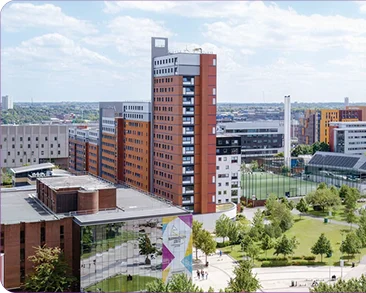
University building
Aston University

Apply now for Jan 2026

Secure your place at Aston University and begin your journey this January 2026.

Need Help?

Our admission counselors are here to guide you through the application process.

Related Articles

Stanford University Scholarships 2027 – Fully Funded Scholarships in the USA

Stanford University Scholarships 2027 – Fully Funded Scholarships in the USA

Study in USA Stanford University is one of the world’s…

Lester B. Pearson International Scholarship 2027 – Fully Funded Undergraduate Scholarship in Canada

Lester B. Pearson International Scholarship 2027 – Fully Funded Undergraduate Scholarship in Canada

Study In Canada The Lester B. Pearson International Scholarship 2027…

Friedrich Ebert Stiftung Scholarship 2026–27 – Scholarship for International Students in Germany

Friedrich Ebert Stiftung Scholarship 2026–27 – Scholarship for International Students in Germany

Study in Germany The Friedrich-Ebert-Stiftung (FES) Scholarship is a German…

Scroll to Top