| Scope of the program | A Diploma in Legal Assistant prepares graduates for critical support roles in the legal area, collaborating with lawyers and other legal professionals. This program emphasises practical abilities in legal research, document preparation, court procedures, and client contact. Graduates can work as legal assistants, paralegals, or legal administrative assistants for law firms, business legal departments, government agencies, and non-profit organisations. They become proficient in using legal software, organising case files, and comprehending legal terminology and procedures. This certification emphasises attention to detail, good organisational abilities, and a dedication to secrecy, all of which contribute to the efficient and effective administration of a legal practice. This diploma's blend of legal knowledge and administrative abilities makes it an excellent choice for students looking to enter the legal profession in a support role. |
| Program entry requirement | High School Diploma or Equivalent: Applicants must have completed high school or its equivalent (e.g., GED, mature student status, or other secondary education qualifications).
Minimum Grades: Competitive programs may require a minimum average of 50% to 65% in high school courses. Specific program requirements may vary. |
| Required GPA | An acceptable average of 50% to 65% in high school courses. |
| GRE Required | N/A |
| GMAT Required | N/A |
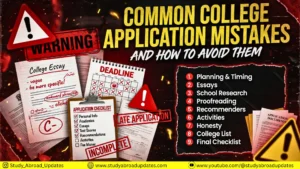
| Application Process | 1. Register for an Online Application:
To start your application, create an account on the university’s application portal. This will give you access to the online application form.
2. Start the Application Process:
Once registered, start filling out the online application form. The process is simple.
3. Complete the Application Form:
Fill out the form with proper and complete information about your academic background, personal details, and program preferences. This will help them to better understand your qualifications.
4. Upload Required Documents:
Use the portal to submit the necessary documents online, which may include:
• Official Transcripts: Submit official transcripts from any institutions you have attended.
• Standardized Test Scores: If applicable, upload your English language test score reports.
• CV or Resume: Provide an up-to-date CV or resume that highlights your educational and professional experience.
• Statement of Purpose: Write a statement detailing your goals for the program, research interests, and reasons for applying.
• Letters of Recommendation: Arrange for two recommenders to submit letters of recommendation through the portal, based on their knowledge of your academic capabilities. |
| Available Scholarships | |
| Program accreditation | N/A |
| Living expenses | Student residences: 250 – 625 CAD/month. University-arranged homestays: 400 – 800 CAD/month. Rent & share an apartment: 300 – 700 CAD/month, prices for rent depend on location and facilities. If you choose to rent a studio/one-room apartment, you can pay over 1,000 CAD/month. |
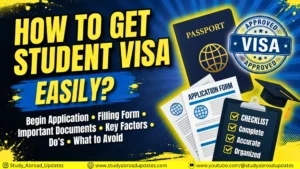
| Visa Process Details | "1. Completed application form (IMM 1294).
2. Acceptance letter from the university.
3. Proof of funds showing you can cover your living expenses and tuition fees.
4. Bank statements.
5. Educational documents or evidence of sponsorship (if applicable).
6. Medical examination report from a doctor authorized by immigration.
7. Police clearance certificates from your country of birth and from any other countries where you have lived for six months or more in the past five years.
8. Passport-sized photographs.
9. Payment for the study permit application fee (currently 150 CAD).
10. Custodian Declaration (IMM 5646) (if applicable), required if you are a minor, must be signed by your custodian in Canada.
" |
| Part timework | Entirely: During planned school breaks, such as the summer or winter holidays, international students studying in Canada are frequently permitted to work entirely. Under 20 Hours (With Possible Exceptions): International students may only be able to work part-time for up to 20 hours a week during ordinary semesters. But, according to your program or any particular work visa you may be eligible for, there might be an exception. |
| Post-study work opportunity | Canada's Post-Graduation Work Permit (PGWP) program: After completing their studies, qualifying international graduates are permitted to work in Canada for a maximum of three years under the terms of this government-mandated scheme. To be eligible, your course of study must be from an approved educational institution, and you must apply for the PGWP as soon as you graduate. Even though NPU might not be on the list of approved universities, you should consider returning to Canada to finish your undergraduate degree or enrolling in a post-graduate program at one of the universities eligible for the PGWP |