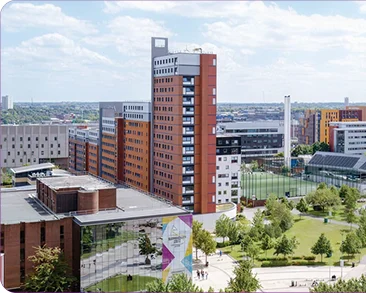
| Scope of the program | Prepares graduates for professional engineering, planning, and leadership careers—such as grid engineer, protection and control engineer, smart-grid developer, power system analyst, and technical consultant—across electrical power production companies, transmission and distribution grid operators, industrial manufacturing enterprises, electrical equipment suppliers, and consulting engineering firms, as well as eligibility to pursue doctoral (PhD) studies. |
| Program entry requirement | All applicants should upload diplomas and transcripts from secondary and higher education. If your institution does not provide you with an English version of your transcripts/diplomas, you must upload both the original and a certified translation into English.
If you have a NOKUT approval, you need to upload this document as well.
You do not need to send any documents by post unless specified in the information for your country.
Educational documents
The original diploma/certificate of higer secondary education
The higher secondary education transcript of records
The original final Bachelor's degree diploma
The Bachelor's degree transcript of records/mark sheets
Master degree diploma and transcript (if you have)
If your institution does not provide you with an English version of your transcripts/diplomas, you must upload both the original and a certified translation into English.
Other documentation
Copy of passport
Declaration of consent
Any name change must be documented
Important information and other requirements
The front and back pages of the original final degree certificate certified by the Higher Education Commission (HEC) with Rs.400 stamp (or higher)
Degree mark sheets certified by HEC
For information about HEC Degree Attestation Service, please visit the HEC website.
Applications without an enclosed final bachelor's degree certificate certified by HEC will not be considered. |
| Required GPA | A recognized 4-year Bachelor's degree in a relevant discipline with a minimum CGPA of 2.7–3.0/4.0 or equivalent. Competitive universities generally prefer 3.0/4.0 or higher. |
| GRE Required | No – GRE is not required for this program. |
| GMAT Required | No – GMAT is not required for this program. |
| Application Process | 1. Apply to an accredited Norwegian higher education institution and secure full-time admission.
2. Receive your official unconditional admission letter confirming your study program.
3. Transfer required living expenses and tuition fees to the university's deposit account or an approved Norwegian bank account.
4. Create an account on the UDI Application Portal Norway and complete the online study permit application.
5. Pay the required UDI residence permit application fee online and download your cover letter.
6. Prepare supporting documents: passport, admission letter, deposit receipt, housing documentation, and insurance.
7. Book a submission appointment at the nearest Norwegian Embassy, Consulate, or VFS Global Centre.
8. Attend your appointment to submit your document checklist, give biometric data, and submit your passport.
9. Track your application status on the UDI portal and await the official decision.
10. Travel to Norway after permit approval and register with the local police station to obtain your Residence Card. |
| Available Scholarships | https://studyabroadupdates.com/scholarships/ |
| Program accreditation | Accredited by NOKUT (Norwegian Agency for Quality Assurance in Education) under the Norwegian university system. |
| Living expenses | Living Expenses: Average living costs range from NOK 12,000–16,000 per month, covering accommodation, food, transportation, study materials, and personal expenses. Students should budget around NOK 150,000–170,000 per year. |
| Visa Process Details | 1. Passport: Valid passport with required validity and blank pages (Mandatory).
2. CNIC / B-Form / FRC: Applicant ID and family relationship documents (Mandatory).
3. Photographs: Recent biometric passport-sized photos (Mandatory).
4. Offer letter: Official unconditional admission letter (Mandatory).
5. Tuition fee receipt: Deposit, tuition payment, or scholarship proof (Mandatory/Conditional).
6. Academic documents: Transcripts, degrees, and required attestations (Mandatory).
7. Language certificate: IELTS, TOEFL, or language test proof (Conditional).
8. CV / resume: Updated resume with education and gap details (Mandatory/Conditional).
9. SOP / motivation letter: Study plan and home ties explanation (Mandatory/Conditional).
10. Financial documents: Bank statements, income proof, and source of funds (Mandatory).
11. Sponsor documents: Sponsor ID, affidavit, and income proof (Conditional).
12. Accommodation proof: Housing booking, contract, or university letter (Mandatory/Conditional).
13. Insurance: Travel and health insurance coverage (Mandatory/Conditional).
14. Police certificate: Character clearance certificate if required (Conditional).
15. Medical certificate: Medical clearance certificate if required (Conditional).
16. Translations / legalization: Certified translations or legalization if required (Conditional).
17. Previous refusals: Visa refusal letters and explanation if applicable (Mandatory if applicable).
18. Travel history: Copies of previous visas and travel stamps (Conditional).
19. Family / home ties: Return proof such as FRC, property, or job ties (Recommended).
20. Country-specific: UDI application portal cover letter (Country-specific).
21. Country-specific: Funds deposit in a Norwegian or student bank account (Country-specific).
22. Country-specific: Housing documentation if required (Country-specific). |
| Part timework | Part-time Work: International students can work up to 20 hours per week during the academic semester and full-time during official holidays. Many students find part-time jobs in retail, hospitality, customer service, and campus roles. |
| Post-study work opportunity | Post-Study Work Opportunity: After graduation, eligible students can apply for a 12-month Job Seeker Residence Permit to stay in Norway and search for employment. Once they secure a qualifying job, they can apply for a Skilled Worker Residence Permit, which can lead to long-term residence if eligibility requirements are met. |