Master of Philosophy in Visual & Multimodal Anthropology

A 2-year (120 ECTS) full-time international master’s degree program taught in English at Campus Tromsø. Administered by the Department of Social Sciences, this internationally renowned program combines rigorous training in anthropological theory and qualitative methods with hands-on production in ethnographic filmmaking, photography, sound recording, and digital/multimodal media. It emphasizes visual research on pressing contemporary topics such as Indigenous issues, environmental transformation, migration, and human rights.

Course Details

CategoryDetails
TimeFull Time
CampusTromsø
Duration2
Deadline-Datetbc,15-November,
Fee Per Year100500
Application Fee
Currencynok
Intake Linkhttps://en.uit.no/education/art?p_document_id=435221
Deadline Linkhttps://en.uit.no/admission
IntakesAugust
Program language requirementProof of English proficiency can be documented by using one of the following tests. We do not accept tests that are older than two years by our application deadline. Proof of English proficiency must be submitted with your application by the application deadline. TOEFL (Test of English as a Foreign Language) with a minimum score of 85 for an internet-based test (TOEFL iBT / TOEFL iBT Home Edition) or 580 for a paper-based test (PBT). We do not accept TOEFL MyBest Score to meet our English language requirements. Make sure to give UiT The Arctic University of Norway access to your verify your score report: Our Institutional code is 0742. Also upload a copy of your test result. IELTS - Academic test: International English Language Testing Service (IELTS) Academic with a minimum of 6.5 points or higher. You must upload the official copy of your test result, which we will verify online. Make sure the TRF-number is clearly visible in the uploaded copy. Pearson PTE Academic test with a minimum score of 62 points Cambridge Assessment English exams: Proficiency (CPE) C or better,Advanced (CAE) C or better,First (FCE) B or better,You have to send your results to UiT the Arctic University of Norway via the Cambridge English Candidate Results Website. You must also upload Statement of Results to the application portal. The European language certificate (telc): English B2, The European language certificate (telc): English B2-C1 University, The European language certificate (telc): all English certificates på C1-level, Course in English at Norwegian upper secondary school (140 hours) with the grade 4 or better, Advanced course in English at Norwegian upper secondary school with the grade 2 or better The following education gives exemption from submitting an English test: a complete or incomplete university degree in English language and literature, with at least 60 ECTS in the subject English. completed an English language Masters' degree' where the language of instruction was English. Applicants with higher education from Pakistan, MUST document proof English test regardless of whether the medium of instruction is in English. Only applicants who have completed university education where the subject English (for example, a full degree in English language and literature) comprised the main component of the course of study (at least 60 ECTS or its equivalent) can be exempted.

Who can Choose this program?

HEC-recognized Pakistani university. Relevance is critical. You cannot do an M.Phil in Philosophy if your BA is in Engineering or Business. You need a substantial background in Philosophy (usually 80-120 ECTS credits of Philosophy courses).

Additional Information

CategoryDetails
Scope of the programPrepares graduates for specialized research, creative media, communication, and advocacy roles—such as ethnographic filmmaker, documentary producer, visual researcher, cultural heritage coordinator, media consultant, migration or human rights policy advisor, and research/PhD candidate—across television and film industries, academic institutions, museums, international non-governmental organizations (NGOs), public administration bodies, and cultural communication agencies.
Program entry requirementBachelor degree (180 ECTS) or equivalent qualification with a minimum of 80 ECTS in anthropology, sociology, ethnology, folklore, cultural studies, visual culture or other closely related fields of study. Applicants must have a minimum grade average comparable to a Norwegian C (2,5) in the ECTS scale. Academic Qualifications from Pakistan You must verify your uploaded educational credentials at the Higher Education Commission in Pakistan (HEC Stamp).
Required GPAA recognized 4-year Bachelor's degree in a relevant discipline with a minimum CGPA of 2.7–3.0/4.0 or equivalent. Competitive universities generally prefer 3.0/4.0 or higher.
GRE RequiredNo – GRE is not required for master's programs at UiT The Arctic University of Norway.
GMAT RequiredNo – GMAT is not required for master's programs at UiT The Arctic University of Norway.
Application Process1. Apply to an accredited Norwegian higher education institution and secure full-time admission. 2. Receive your official unconditional admission letter confirming your study program. 3. Transfer required living expenses and tuition fees to the university's deposit account or an approved Norwegian bank account. 4. Create an account on the UDI Application Portal Norway and complete the online study permit application. 5. Pay the required UDI residence permit application fee online and download your cover letter. 6. Prepare supporting documents: passport, admission letter, deposit receipt, housing documentation, and insurance. 7. Book a submission appointment at the nearest Norwegian Embassy, Consulate, or VFS Global Centre. 8. Attend your appointment to submit your document checklist, give biometric data, and submit your passport. 9. Track your application status on the UDI portal and await the official decision. 10. Travel to Norway after permit approval and register with the local police station to obtain your Residence Card.
Available Scholarshipshttps://studyabroadupdates.com/scholarships/
Program accreditationNOKUT accredited (Norwegian Agency for Quality Assurance in Education).
Living expensesLiving Expenses: Average living costs range from NOK 12,000–16,000 per month, covering accommodation, food, transportation, study materials, and personal expenses. Students should budget around NOK 150,000–170,000 per year.
Visa Process Details1. Passport: Valid passport with required validity and blank pages (Mandatory). 2. CNIC / B-Form / FRC: Applicant ID and family relationship documents (Mandatory). 3. Photographs: Recent biometric passport-sized photos (Mandatory). 4. Offer letter: Official unconditional admission letter (Mandatory). 5. Tuition fee receipt: Deposit, tuition payment, or scholarship proof (Mandatory/Conditional). 6. Academic documents: Transcripts, degrees, and required attestations (Mandatory). 7. Language certificate: IELTS, TOEFL, or language test proof (Conditional). 8. CV / resume: Updated resume with education and gap details (Mandatory/Conditional). 9. SOP / motivation letter: Study plan and home ties explanation (Mandatory/Conditional). 10. Financial documents: Bank statements, income proof, and source of funds (Mandatory). 11. Sponsor documents: Sponsor ID, affidavit, and income proof (Conditional). 12. Accommodation proof: Housing booking, contract, or university letter (Mandatory/Conditional). 13. Insurance: Travel and health insurance coverage (Mandatory/Conditional). 14. Police certificate: Character clearance certificate if required (Conditional). 15. Medical certificate: Medical clearance certificate if required (Conditional). 16. Translations / legalization: Certified translations or legalization if required (Conditional). 17. Previous refusals: Visa refusal letters and explanation if applicable (Mandatory if applicable). 18. Travel history: Copies of previous visas and travel stamps (Conditional). 19. Family / home ties: Return proof such as FRC, property, or job ties (Recommended). 20. Country-specific: UDI application portal cover letter (Country-specific). 21. Country-specific: Funds deposit in a Norwegian or student bank account (Country-specific). 22. Country-specific: Housing documentation if required (Country-specific).
Part timeworkPart-time Work: International students can work up to 20 hours per week during the academic semester and full-time during official holidays. Many students find part-time jobs in retail, hospitality, customer service, and campus roles.
Post-study work opportunityPost-Study Work Opportunity: After graduation, eligible students can apply for a 12-month Job Seeker Residence Permit to stay in Norway and search for employment. Once they secure a qualifying job, they can apply for a Skilled Worker Residence Permit, which can lead to long-term residence if eligibility requirements are met.

What are the requirements for the Master's program in Visual Anthropology at UiT?

Applicants need a recognized Bachelor's degree (180 ECTS) or equivalent, with a minimum of 80 ECTS in relevant fields such as anthropology, sociology, or cultural studies. A minimum grade average comparable to a Norwegian C (2.5) is required.

Is proof of English proficiency required for admission to the program?

Yes, proof of English proficiency must be submitted by the application deadline. Accepted tests include TOEFL, IELTS, Pearson PTE Academic, and certain Cambridge Assessment English exams.

How long is the Master's program in Visual Anthropology and what is the structure?

The program lasts for 2 years (120 ECTS) and includes intensive coursework in the first year, followed by a 4 to 5 month independent field research phase and a second year focused on production and thesis writing.

Can international students work while studying in Norway?

Yes, international students can work up to 20 hours per week during the academic semester and full-time during official holidays.

What opportunities are available after graduating from the Master's program?

Graduates can apply for a 12-month Job Seeker Residence Permit to look for employment in Norway. Once they secure a qualifying job, they can apply for a Skilled Worker Residence Permit, leading to potential long-term residence.

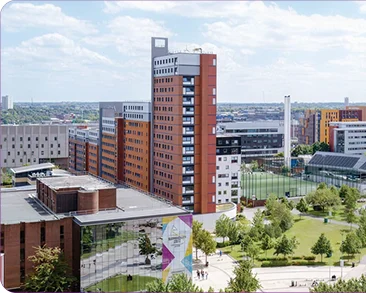
University building
Aston University

Apply now for Jan 2026

Secure your place at Aston University and begin your journey this January 2026.

Need Help?

Our admission counselors are here to guide you through the application process.

Related Articles

Yokohama National University Postgraduate and PhD Scholarships 2027 in Japan

Yokohama National University Postgraduate and PhD Scholarships 2027 in Japan

Yokohama National University (YNU) is one of Japan’s leading national…

Yokohama National University Undergraduate Scholarships 2027 in Japan

Yokohama National University Undergraduate Scholarships 2027 in Japan

Yokohama National University (YNU) is one of Japan’s leading national…

Waseda University Undergraduate Scholarships 2027 in Japan

Waseda University Undergraduate Scholarships 2027 in Japan

Waseda University is one of Japan’s most prestigious private universities,…

Scroll to Top