
Niigata University PhD Scholarships 2027 in Japan
Niigata University is one of Japan’s leading national research universities,…
| Category | Details |
|---|---|
| Time | |
| Campus | Cologne Campus |
| Duration | 2 |
| Deadline-Date | |
| Fee Per Year | |
| Application Fee | |
| Currency | euro |
| Intake Link | https://portal.uni-koeln.de/en/studying-teaching/studying/organise-your-stay/dates-deadlines/winter-term-23-24 |
| Deadline Link | https://studienorientierung.uni-koeln.de/range_of_courses/index_eng.html?app=true&id=361#fristen |
| Intakes | April |
| Program language requirement | For English-Taught Programs (e.g., M.Sc. Economics, M.Sc. International Management): TOEFL iBT: 90-100 (varies by program). IELTS: 6.5-7.0 (no band below 6.0). Some programs accept Cambridge English (C1 Advanced/C2 Proficiency). For German-Taught Programs (e.g., M.A. Germanistik, M.Sc. Psychologie): TestDaF: Level 4 (TDN 4) in all sections. DSH: Level 2 or higher. Goethe-Zertifikat C2 or Telc Deutsch C1 Hochschule. |
| Category | Details |
|---|---|
| Scope of the program | |
| Program entry requirement | A Bachelor’s degree (4 years, 180+ ECTS or equivalent) in a relevant field. |
| Required GPA | Minimum GPA: Typically 2.7 (German grading system) or better (varies by program). |
| GRE Required | |
| GMAT Required | |
| Application Process | 1. Register for an Online Application Portal: Start by creating an account on the Uni-Assist portal or the specific university's application portal, depending on where you're applying. This gives you access to the application form and allows you to track your progress. 2. Start the Application Process: After registration, begin filling out the online application form. You can apply to multiple universities and programs through Uni-Assist or directly if the university has its own system. 3. Complete the Application Form: Provide accurate and complete information, including personal details, academic background, choice of study program, and previous qualifications. Double-check for errors before submitting. 4. Upload Required Documents: Submit all required documents through the portal. These typically include: Academic Transcripts: Official copies of your school-leaving certificates, bachelor's degrees, and mark sheets (with certified German or English translations). Language Proficiency Test Scores: 1. For English-taught programs: IELTS/TOEFL 2. For German-taught programs: TestDaF, DSH, or Goethe-Zertifikat CV or Resume: Updated and formatted in Europass style (recommended). Statement of Purpose/Motivation Letter: Describe your academic goals, program interest, and why you wish to study in Germany. Letters of Recommendation: Usually 1–2 academic references from previous professors or employers, submitted as PDFs. Passport Copy: A clear copy of your valid passport. 5. Pay the Application Fee: For Uni-Assist, the standard fee is €75 for the first university and €30 for each additional university. Payments are made online via bank transfer or credit card. 6. Submit Your Application: After completing all sections and uploading documents, submit your application before the deadline. You will receive confirmation of submission and updates via email. 7. Wait for the Admission Decision: Universities may take 4–12 weeks to review your application. Once accepted, you’ll receive an admission letter, which is required for your visa application. |
| Available Scholarships | https://studyabroadupdates.com/category/study-in-germany/ |
| Program accreditation | |
| Living expenses | Living in Germany is relatively affordable compared to other Western European countries, especially for students. Here’s a breakdown of typical monthly expenses: Accommodation Shared flats or student dorms are the most budget-friendly. Rent varies by city and location. Average cost: €300 to €600/month Transportation Most universities include a semester ticket that offers unlimited local travel. If not included, monthly passes are still reasonably priced. Average cost: €30 to €50/month Health Insurance Mandatory for all students in Germany. Public student health insurance is the most common option. Average cost: €110 to €120/month |
| Visa Process Details | Germany Student Visa (National Visa – Type D) International students must apply for a long-term national visa before entering Germany to pursue full-time academic studies. Required Documents: A valid passport (minimum 6-month validity) A letter of admission from a recognized German university Proof of financial resources, typically via a blocked account showing at least €11,208/year (2025 requirement) Health insurance coverage valid in Germany Academic transcripts and certificates of previous education Completed visa application form and payment of the application fee (€75) |
| Part timework | International students in Germany are legally allowed to work part-time while studying, which helps cover living expenses and gain valuable work experience. Work Limitations: 120 full days OR 240 half days per year No work restrictions during official semester breaks Must inform and sometimes get permission from the Federal Employment Agency Common Part-Time Jobs: A research assistant or student assistant at university An english tutor or freelance translator The café or restaurant staff Customer support or data entry roles Delivery rider or cashier |
| Post-study work opportunity | After graduating from a German university, you can apply for an 18-month residence permit to search for a job related to your degree. This permit is called the "Residence Permit for Jobseekers" (Aufenthaltserlaubnis für Arbeitsplatzsuche). You must apply before your student visa expires. |
To apply for a Master's program at the University of Cologne, you need a Bachelor's degree (4 years, 180+ ECTS or equivalent) in a relevant field. Additionally, a minimum GPA of 2.7 (German grading system) or better is typically required, although this may vary by program.
The average monthly living expenses for students in Germany typically include accommodation (around €300 to €600), transportation (€30 to €50), and health insurance (€110 to €120). Overall, living in Germany is considered relatively affordable compared to other Western European countries.
Yes, international students in Germany are legally allowed to work part-time while studying. They can work 120 full days or 240 half days per year, with no work restrictions during official semester breaks. Common part-time jobs include research assistants, English tutors, and café staff.
International students must apply for a long-term national visa before entering Germany. Required documents include a valid passport, a letter of admission from a recognized German university, proof of financial resources (at least €11,208/year), health insurance coverage, academic transcripts, and a completed visa application form with a €75 fee.
After graduating from a German university, you can apply for an 18-month residence permit to search for a job related to your degree. This is known as the "Residence Permit for Jobseekers" (Aufenthaltserlaubnis für Arbeitsplatzsuche), which must be applied for before the student visa expires.
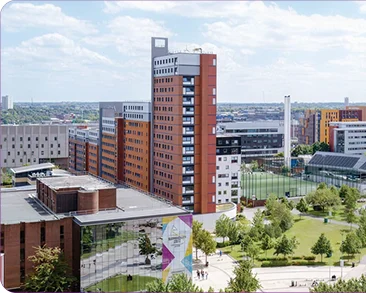

Secure your place at Aston University and begin your journey this January 2026.

Our admission counselors are here to guide you through the application process.
Niigata University is one of Japan’s leading national research universities,…
Niigata University is one of Japan’s leading national universities, recognised…
Niigata University is one of Japan’s leading national universities, ranked…
Study Abroad Genie


