


Studying abroad is a dream for millions of students worldwide. Whether you want to study in the United States, Canada, the UK, Germany, Australia, or Asia, getting into a top university in 2026 requires proper planning, research, and preparation.
The good news is that students from any country can gain admission to world-class universities if they understand the process and prepare early. From choosing the right country to finding scholarships, every step matters.
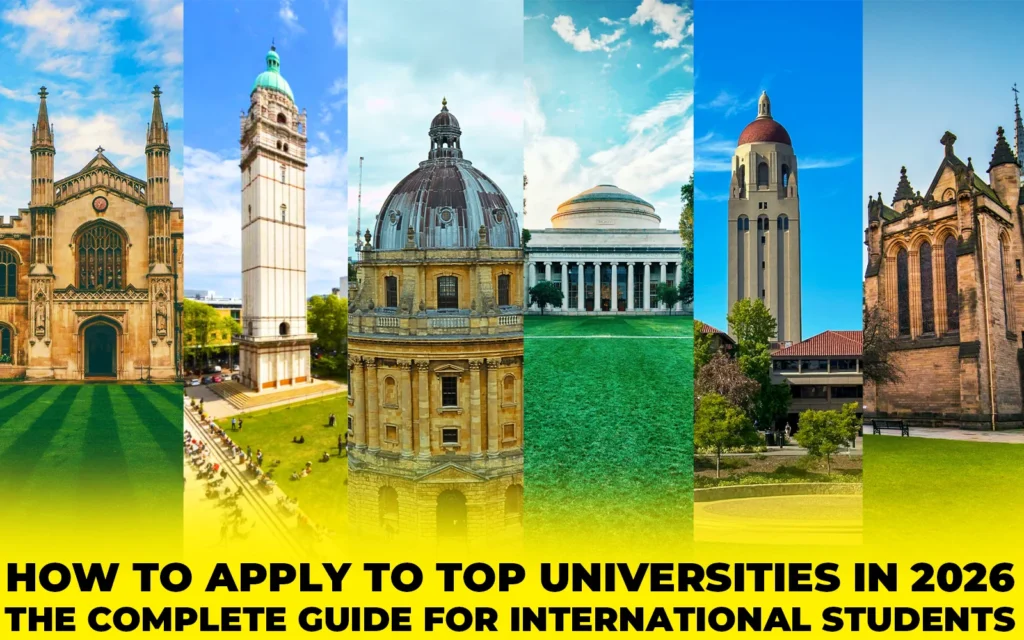
This guide will walk you through everything you need to know about applying to top universities in 2026.
Step 1: Choose the Right Country
Your country choice is one of the most important decisions because it affects tuition fees, visa opportunities, career options, and even your lifestyle.
Consider the Language of Study
Many students think they can only study in countries where their native language is spoken. However, that is no longer true.
Today, many countries offer English-taught programs, even if English is not the main language.
For example:
- Germany offers hundreds of English-taught programs.
- The Netherlands has many international degrees in English.
- Countries such as China, Japan, and South Korea also offer English-medium programs.
- Universities in Hong Kong teach entirely in English.
This means students now have more options than ever before.
Understand the Cost of Education
One of the biggest factors in studying abroad is finances.
Tuition fees vary greatly from country to country:
- In Canada, tuition for international students can easily exceed $40,000 per year.
- In the United States, total yearly costs including tuition, accommodation, food, insurance, and books can reach $100,000.
- In Germany, many public universities offer education with little to no tuition fees.
Because costs vary so much, there is no single answer to the question, “How much does studying abroad cost?” Every country and its universities are different.
Think About Post-Graduation Opportunities
Many students focus only on getting admission but forget to think about what happens after graduation. Student visas usually expire after completing your degree, so post-study work opportunities are extremely important.
Post-Study Work Options
- United States: 1 year OPT for non-STEM majors
- United States (STEM): 3 years OPT
- Canada: Up to 3 years
- UK: 2 years
- Germany: 18 months
Countries have different immigration and work visa systems, so you should research this before applying.
Check Entry Requirements Carefully
Different countries have completely different admission systems.
United States
American universities place strong emphasis on:
- Extracurricular activities
- Leadership
- Community involvement
- Essays
- Personal achievements
United Kingdom
UK universities focus more on:
- Academic grades
- Subject-specific preparation
- Personal statements
Some countries also require a specific number of years of education before entering university. For example, students from countries with only 11 years of schooling may need to complete a foundation year before starting undergraduate studies in the UK. Understanding these requirements early helps you avoid major surprises later.
Step 2: Choose the Right University
There are over 23,000 universities worldwide, so choosing the right one can feel overwhelming.
Do Not Choose Based Only on Rankings
University rankings are useful, but they should not be your only factor.
Many rankings are based on:
- Research output
- Citations
- Reputation
- Employer surveys
These factors do not always reflect student experience or teaching quality.
Instead of focusing only on rankings, look deeper into the university itself.
Research Your Specific Program
A university may be famous overall but not necessarily strong in your chosen subject. For example, a university might excel in engineering but not offer a strong business program.
When researching universities, look at:
- Course curriculum
- Research opportunities
- Internship programs
- Class sizes
- Teaching style
- Laboratory facilities
- Professors and faculty
Your major matters more than the university name alone.
Check Scholarship Availability
Many scholarships are only available to domestic students. As an international student, you must specifically research scholarships meant for international applicants. Some universities automatically consider students for scholarships, while others require separate applications. Always read the eligibility requirements carefully.
Consider the Location
The location of a university can completely shapes your experience.
Living in a large city is very different from living in a small town.
You should think about:
- Weather
- Food
- Transportation
- Safety
- Cultural diversity
- Job opportunities
- Lifestyle
For example, studying in New York is completely different from studying in Texas or California.
Research Employment Outcomes
One of the best ways to evaluate a university is by looking at what graduates are doing after completing their degrees. Ask yourself:
- Do graduates work at top companies?
- Are alumni successful in your industry?
- What are average graduate salaries?
- Does the university have strong industry connections?
Employment statistics often matter more than rankings.
Step 3: Choose the Right Major
Your major is one of the most important decisions in your academic journey because it affects your education, career options, and even immigration opportunities.
Understand How Major Systems Work
In many countries, students apply directly to a specific major.
For example:
- If you apply for Mechanical Engineering, you will likely graduate with that degree.
- Changing majors later may be difficult.
The United States offers more flexibility compared to many other countries, especially in liberal arts colleges.
Know How Your Major Affects Visa Opportunities
In some countries, especially the United States, STEM majors often receive longer work opportunities after graduation.
Fields like:
- Computer Science
- Engineering
- Data Science
- Information Technology
usually have:
- Higher visa sponsorship rates
- Better job opportunities
- Longer post-study work periods
This does not mean you should ignore your interests, but it is important to understand the practical consequences of your major choice.
Pro Tip:
Avoid Choosing a Major Just Because It Is “Less Competitive”
Many students try to apply for less competitive majors simply to increase admission chances. However, this strategy often fails.
Admissions officers can usually identify when:
- A student’s activities do not match their chosen major
- Interests feel forced or unrealistic
- Applications lack authenticity
If your profile strongly shows interest in computer science, suddenly applying for anthropology may weaken your application instead of strengthening it. Because authenticity matters.
Step 4: Build Strong Extracurricular Activities
Extracurricular activities are one of the most misunderstood parts of university applications.
What Counts as an Extracurricular Activity?
An extracurricular activity is anything meaningful you do outside the classroom.
Examples include:
- Sports
- Debate clubs
- Volunteer work
- Coding projects
- YouTube channels
- Family responsibilities
- Part-time jobs
- Research projects
Not every activity has to be formal or school-based.
Quality Matters More Than Quantity
Top universities prefer students with a few meaningful long-term activities instead of many short-term activities.
For example:
- Being a debate club president for three years is stronger than joining ten clubs for one month each.
Universities value commitment, leadership, and growth.
Focus on Impact
Admissions officers care about what you achieved, not just what you joined.
Instead of saying:
“I attended meetings.”
Show impact like:
- Organized events
- Led a team
- Built an app
- Helped the community
- Raised funds
- Taught students
Impact makes your application stronger.
Step 5: Find Scholarships and Financial Aid
Scholarships can make studying abroad affordable, even at expensive universities.
Types of Scholarships
Need-Based Financial Aid
Some universities provide aid based on your family’s financial situation. These universities calculate how much support you need to attend. A few top universities in the United States are known for offering generous financial aid to international students. However, these universities are also highly competitive.
Merit Scholarships
Merit scholarships are awarded based on achievements such as:
- Academic excellence
- Leadership
- Talent
- Extracurricular activities
Scholarships can range from small tuition discounts to full-ride scholarships covering all expenses.
Government Scholarships
Some governments sponsor students to study abroad. However, these scholarships may require students to return home and work in their country after graduation. Before accepting such scholarships, carefully consider your long-term goals.
Additional Requirements for 2026 Applications
Apart from the five major steps above, students should also prepare:
- Strong grades
- English proficiency tests (IELTS, TOEFL, Duolingo)
- SAT or ACT (if required)
- Personal statements
- Recommendation letters
- Resume or CV
Start preparing these documents early to avoid stress later.
Final Thoughts
Applying to top universities in 2026 may seem complicated, but with proper preparation, it is absolutely achievable.
The key is to:
- Choose the right country
- Research universities carefully
- Select a meaningful major
- Build strong extracurricular activities
- Apply for scholarships early
Remember that university applications are not only about grades. Top universities want students with passion, curiosity, leadership, and a clear sense of purpose. No matter where you come from, your dream university is possible if you prepare strategically and stay consistent throughout the process.
Why Study Abroad Updates
We are your one-stop website for everything related to studying abroad. Our website is made to give you all the information you need to have a fun and easy path toward studying abroad. We can assist you whether you’re seeking for the best places to study, the newest scholarships, or university rankings. Get in touch with us for individualized advice, or view our videos to learn more about the university of your dreams. Our Study Abroad Genie is available around the clock to help you at every stage. Take the first step toward reaching your objectives by starting your study abroad journey with us right now. Get the most recent opportunities, professional advice, book a free session and chat with us at every time in just one click.